
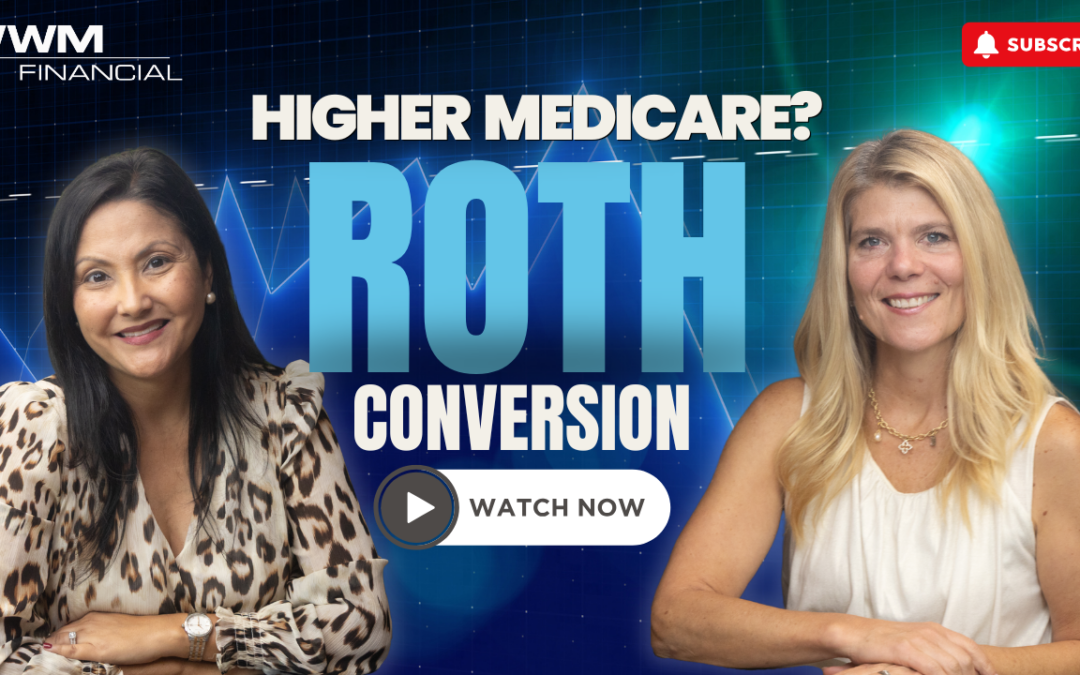
Will Medicare Cost More After A Roth Conversion?

Will Medicare Cost More After A Roth Conversion?

Could a Roth conversion unexpectedly increase your Medicare premiums?

Roth conversions can be a powerful retirement tax-planning strategy, but the tax bill isn’t the only number to consider. In this segment, Catherine Magaña and Rachel Ivanovich discuss how Roth conversion income can affect your modified adjusted gross income (MAGI), potentially triggering IRMAA and higher Medicare Part B and Part D premiums.

In this episode:

  • How a Roth conversion can affect Medicare premiums

  • Why Roth conversion income matters for IRMAA

  • Medicare’s two-year income lookback

  • Why higher Medicare costs don’t automatically make a Roth conversion a bad decision

  • When to reevaluate a Roth conversion before year-end

  • How future tax brackets and RMDs can factor into long-term planning

A Roth conversion can have ripple effects beyond your tax return. The key is understanding how today’s decision could affect your Medicare costs and retirement taxes in the years ahead.

If you’re considering a Roth conversion and want to understand how it fits into your bigger retirement picture, WWM Financial is here to help you evaluate the moving pieces before you make the decision.

Date Recorded: 9/24/26

Disclosure:

WWM Financial is an SEC Registered Investment Advisor

The opinions expressed in this program are for general informational purposes only and are not intended to provide specific advice or recommendations for any individual or on any specific security. It is only intended to provide education about the financial industry and how we may be able to assist. To determine which investments may be appropriate for you, consult your financial advisor prior to investing. Any past performance discussed during this program is no guarantee of future results. As always please remember investing involves risk and possible loss of principal capital. Tax considerations presented may not be appropriate every individual circumstance. A tax professional should be consulted before making any decisions about your tax liability. wwmfinancial.com | 760.692.5190


How Does The Inherited IRA 10-YEAR Rule Work?

How Does The Inherited IRA 10-YEAR Rule Work?

⏱ Inherited IRA 10-Year Rule: 9:13–12:19

Inheriting an IRA can come with more questions than expected—especially when the 10-year rule enters the picture. Do you have to take distributions every year? Should you wait? And could the timing of those withdrawals create a bigger tax bill?

In this episode, the WWM Financial team breaks down the Inherited IRA 10-Year Rule and why those ten years shouldn’t simply be viewed as a countdown. For many non-spouse beneficiaries, the account generally must be emptied by the end of the tenth year—but when you recognize that taxable income can matter just as much as when the account has to be emptied.

In this episode:

• How the Inherited IRA 10-Year Rule works

•Why waiting until year 10 may not always make sense

• How inherited IRA withdrawals can affect your taxes

• Why retirement timing can create tax-planning opportunities

• What higher bond yields could mean for investors

• Dividend-paying stocks and the competition for income

• Corporate earnings and the market outlook

The key takeaway? The 10-year window isn’t just about when the money has to come out—it’s about what you do during those ten years. Thoughtful coordination between your inherited IRA, retirement income, investments, and tax strategy can help you make more informed decisions along the way.

Date Recorded: 9/24/26

Disclosure:

WWM Financial is an SEC Registered Investment Advisor

The opinions expressed in this program are for general informational purposes only and are not intended to provide specific advice or recommendations for any individual or on any specific security. It is only intended to provide education about the financial industry and how we may be able to assist. To determine which investments may be appropriate for you, consult your financial advisor prior to investing. Any past performance discussed during this program is no guarantee of future results. As always please remember investing involves risk and possible loss of principal capital. Tax considerations presented may not be appropriate every individual circumstance. A tax professional should be consulted before making any decisions about your tax liability. wwmfinancial.com | 760.692.5190
Could Your Money Work Harder Than Paying Off Your Mortgage?

Could Your Money Work Harder Than Paying Off Your Mortgage?

Paying off your mortgage may feel like the obvious financial move—but is it always the right one? In this episode, the WWM Financial team explores the factors that can make this decision more complicated than it seems. From low interest rates and taxes to opportunity cost, cash flow, and peace of mind, there’s more to consider before saying goodbye to your mortgage. The bigger question isn’t simply whether you can pay it off—it’s what makes the most sense for your overall financial picture.

Plus, the team discusses:

  • The market tug-of-war between inflation, interest rates, earnings, and economic growth

  • Why investors could see continued market volatility

  • Tax considerations when selling a longtime family home

  • Planning opportunities when moving into a continuing care retirement community

  • Potential changes to the capital gains exclusion on home sales

Sometimes the most obvious financial move deserves a second look. Question the payoff, understand the tradeoffs, and make the decision that fits your bigger financial picture.

Date Recorded: 9/03/26

Disclosure:

WWM Financial is an SEC Registered Investment Advisor

The opinions expressed in this program are for general informational purposes only and are not intended to provide specific advice or recommendations for any individual or on any specific security. It is only intended to provide education about the financial industry and how we may be able to assist. To determine which investments may be appropriate for you, consult your financial advisor prior to investing. Any past performance discussed during this program is no guarantee of future results. As always please remember investing involves risk and possible loss of principal capital. Tax considerations presented may not be appropriate every individual circumstance. A tax professional should be consulted before making any decisions about your tax liability. wwmfinancial.com | 760.692.5190

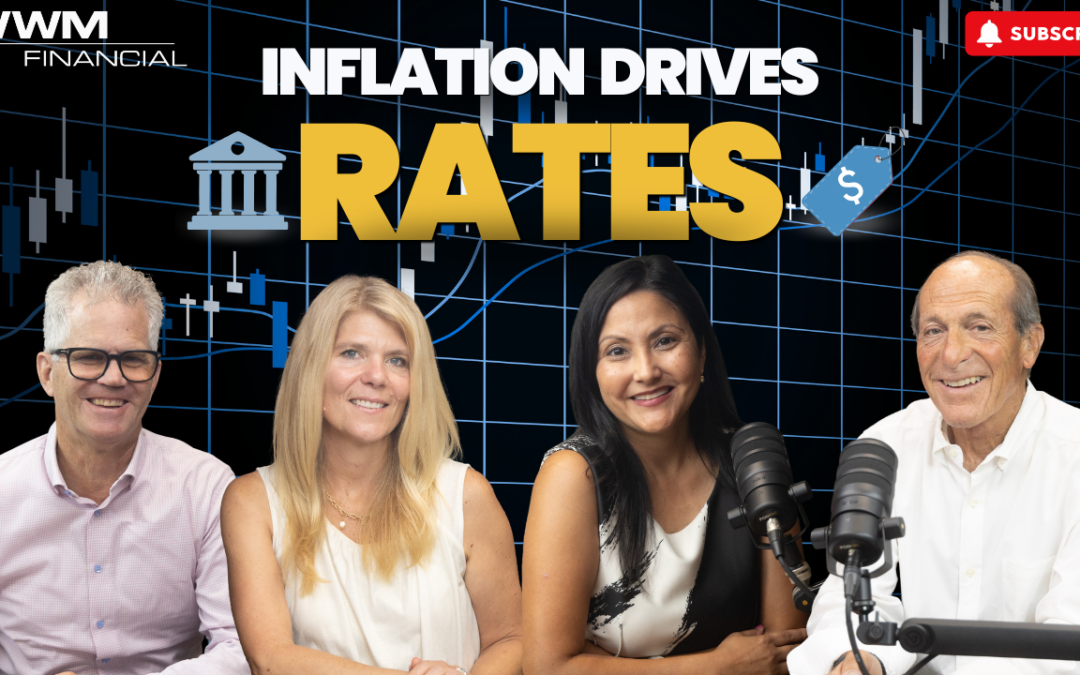
Could Higher Inflation Keep Rates Higher Than Expected?

Could Higher Inflation Keep Rates Higher Than Expected?

Higher inflation could mean higher interest rates for longer—but what could that mean for investors and their money? In this episode, the WWM Financial team breaks down the latest inflation data, the impact of rising oil prices, and why the Federal Reserve’s next move may not be as predictable as investors hope.

The conversation also explores how today’s rate environment connects to the bigger financial picture, including:

  • Why inflation could influence future interest-rate decisions

  • How oil prices can add inflationary pressure

  • What current mortgage rates and Treasury yields are signaling

  • Whether cash and money-market yields are really keeping pace with inflation after taxes

  • Important 401(k) decisions, including Roth vs. pre-tax contributions and investment choices

  • Why the upcoming midterm elections could add another layer of market uncertainty

With inflation driving the rate conversation, understanding what’s happening—and how the pieces connect—can help investors stay focused as economic conditions continue to shift.

Date Recorded: 08/13/26

Disclosure:

WWM Financial is an SEC Registered Investment Advisor

The opinions expressed in this program are for general informational purposes only and are not intended to provide specific advice or recommendations for any individual or on any specific security. It is only intended to provide education about the financial industry and how we may be able to assist. To determine which investments may be appropriate for you, consult your financial advisor prior to investing. Any past performance discussed during this program is no guarantee of future results. As always please remember investing involves risk and possible loss of principal capital. Tax considerations presented may not be appropriate every individual circumstance. A tax professional should be consulted before making any decisions about your tax liability. wwmfinancial.com | 760.692.5190

AI Investing Is Entering Its Next Phase!

AI Investing Is Entering Its Next Phase!

The AI story isn’t over, it’s evolving. As AI investing enters its next phase, understanding the bigger picture has never been more important. Join Catherine, Rachel, and Vince as they break down recent market developments, evolving investor expectations, and what they could mean for long-term investors.

Recent market swings don’t always tell the full story. Learn why separating short-term headlines from long-term trends is essential, how institutional investors are responding to today’s AI landscape, and why staying disciplined can help you make more confident investment decisions as the next phase unfolds.

In this episode, you’ll learn:

  • Why AI investing may be entering its next phase

  • What recent market moves could really be signaling

  • The difference between short-term hype and long-term opportunity

  • How investor expectations are influencing today’s markets

  • Why having a disciplined financial plan matters when markets change

The next phase of AI investing isn’t just about new technology—it’s about recognizing how changing market conditions, earnings, and investor sentiment can shape future opportunities. Tune in to gain practical insights that can help you stay focused on your long-term financial goals, no matter what the headlines say.

Date Recorded: 07/30/26

Disclosure:

WWM Financial is an SEC Registered Investment Advisor

The opinions expressed in this program are for general informational purposes only and are not intended to provide specific advice or recommendations for any individual or on any specific security. It is only intended to provide education about the financial industry and how we may be able to assist. To determine which investments may be appropriate for you, consult your financial advisor prior to investing. Any past performance discussed during this program is no guarantee of future results. As always please remember investing involves risk and possible loss of principal capital. Tax considerations presented may not be appropriate every individual circumstance. A tax professional should be consulted before making any decisions about your tax liability. wwmfinancial.com | 760.692.5190