
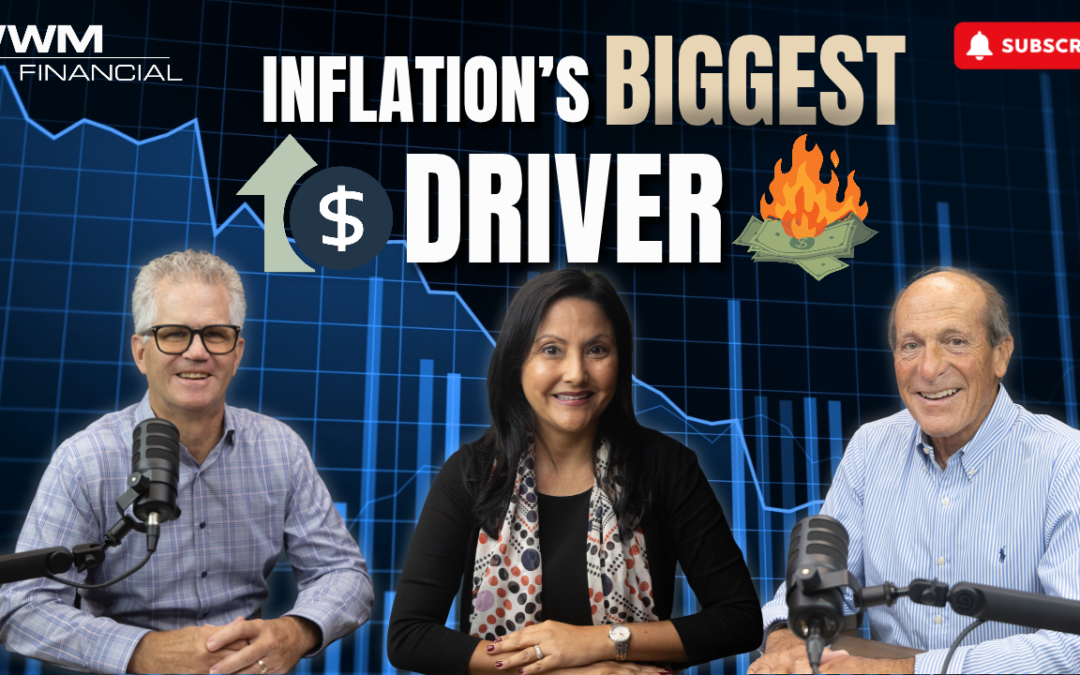
Why Is Inflation Still rising And What’s Behind The Surge?

Why Is Inflation Still rising And What’s Behind The Surge?

What’s Fueling the Inflation Surge?: 5:40–8:20

Inflation is heating up again, but what’s really behind the latest surge? While some everyday prices are falling, others are climbing at an alarming pace—and one major factor is putting renewed pressure on the economy.

In this episode, the WWM Financial team uncovers inflation’s biggest driver, examining how rising energy prices, gasoline costs, and unexpected inflation reports are affecting consumers and investors. Could energy costs be keeping inflation higher than expected?

Plus, what does rising inflation mean for the Federal Reserve, interest rates, and the stock market? The team explores how shifting economic conditions could influence investment decisions and what investors should be watching next.

Also in this episode:

  • Why inflation remains a concern for the Federal Reserve

  • How AI stocks and market volatility are affecting investors

  • What rising Treasury yields could mean for retirement income planning

  • How consumer spending is holding up despite higher prices

  • Why understanding economic trends matters for your investment strategy

Tune in to discover what’s driving inflation in 2026 and what it could mean for your financial future.

Date Recorded: 10/15/26

Disclosure:

WWM Financial is an SEC Registered Investment Advisor

The opinions expressed in this program are for general informational purposes only and are not intended to provide specific advice or recommendations for any individual or on any specific security. It is only intended to provide education about the financial industry and how we may be able to assist. To determine which investments may be appropriate for you, consult your financial advisor prior to investing. Any past performance discussed during this program is no guarantee of future results. As always please remember investing involves risk and possible loss of principal capital. Tax considerations presented may not be appropriate every individual circumstance. A tax professional should be consulted before making any decisions about your tax liability. wwmfinancial.com | 760.692.5190

What Causes Stock Market Volatility And How Can You Prepare?

What Causes Stock Market Volatility And How Can You Prepare?

What’s behind the stock market’s recent ups and downs? From rising oil prices and shifting interest rate expectations to geopolitical tensions and upcoming midterm elections, several factors are influencing the markets. Understanding what’s driving these changes can help investors put short-term fluctuations into perspective.

In this episode, the WWM Financial team explores the forces behind stock market volatility and what they could mean for your investments. The conversation covers rising Treasury yields, the Federal Reserve’s next moves, concerns surrounding AI spending, and the growing concentration of major technology stocks. Plus, the team discusses why maintaining a long-term investment strategy can be more valuable than reacting to every market headline.

In this episode:

  • What’s contributing to stock market volatility

  • How oil prices and geopolitical tensions influence markets

  • What rising Treasury yields and Fed decisions mean for investors

  • Why technology stock concentration matters

  • How midterm elections could affect market sentiment

  • Year-end tax planning and Roth conversion considerations

  • How much you can comfortably spend in retirement

Markets change, but a thoughtful investment strategy can help you stay focused on what matters most.

Date Recorded: 10/08/26

Disclosure:

WWM Financial is an SEC Registered Investment Advisor

The opinions expressed in this program are for general informational purposes only and are not intended to provide specific advice or recommendations for any individual or on any specific security. It is only intended to provide education about the financial industry and how we may be able to assist. To determine which investments may be appropriate for you, consult your financial advisor prior to investing. Any past performance discussed during this program is no guarantee of future results. As always please remember investing involves risk and possible loss of principal capital. Tax considerations presented may not be appropriate every individual circumstance. A tax professional should be consulted before making any decisions about your tax liability. wwmfinancial.com | 760.692.5190

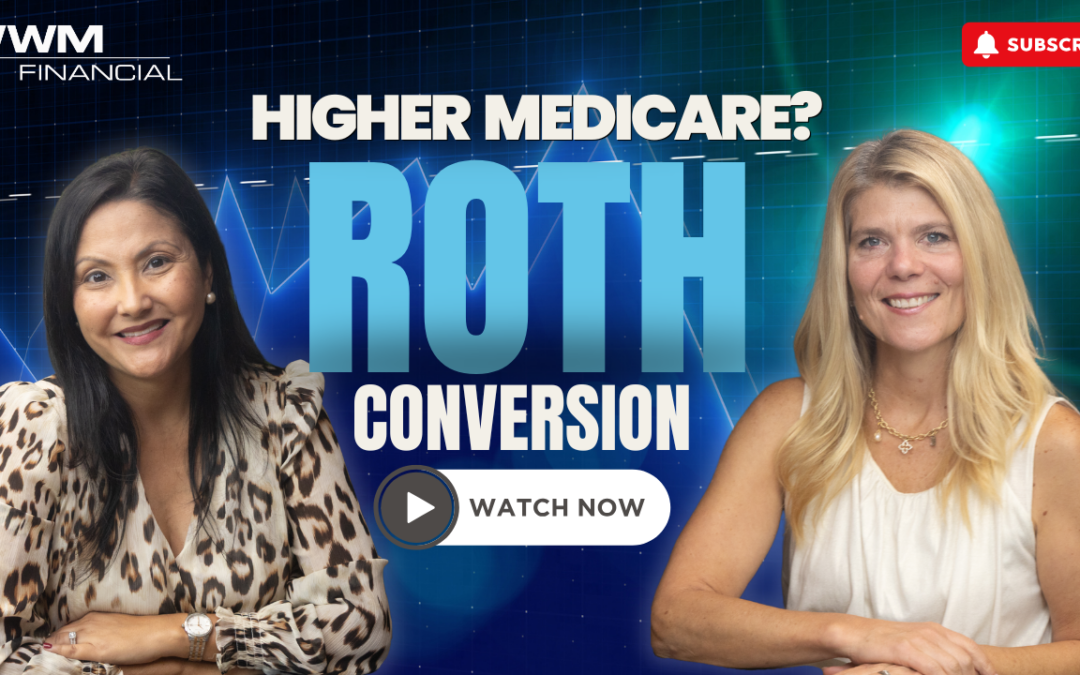
Will Medicare Cost More After A Roth Conversion?

Will Medicare Cost More After A Roth Conversion?

Could a Roth conversion unexpectedly increase your Medicare premiums?

Roth conversions can be a powerful retirement tax-planning strategy, but the tax bill isn’t the only number to consider. In this segment, Catherine Magaña and Rachel Ivanovich discuss how Roth conversion income can affect your modified adjusted gross income (MAGI), potentially triggering IRMAA and higher Medicare Part B and Part D premiums.

In this episode:

  • How a Roth conversion can affect Medicare premiums

  • Why Roth conversion income matters for IRMAA

  • Medicare’s two-year income lookback

  • Why higher Medicare costs don’t automatically make a Roth conversion a bad decision

  • When to reevaluate a Roth conversion before year-end

  • How future tax brackets and RMDs can factor into long-term planning

A Roth conversion can have ripple effects beyond your tax return. The key is understanding how today’s decision could affect your Medicare costs and retirement taxes in the years ahead.

If you’re considering a Roth conversion and want to understand how it fits into your bigger retirement picture, WWM Financial is here to help you evaluate the moving pieces before you make the decision.

Date Recorded: 9/24/26

Disclosure:

WWM Financial is an SEC Registered Investment Advisor

The opinions expressed in this program are for general informational purposes only and are not intended to provide specific advice or recommendations for any individual or on any specific security. It is only intended to provide education about the financial industry and how we may be able to assist. To determine which investments may be appropriate for you, consult your financial advisor prior to investing. Any past performance discussed during this program is no guarantee of future results. As always please remember investing involves risk and possible loss of principal capital. Tax considerations presented may not be appropriate every individual circumstance. A tax professional should be consulted before making any decisions about your tax liability. wwmfinancial.com | 760.692.5190

How Does The Inherited IRA 10-YEAR Rule Work?

How Does The Inherited IRA 10-YEAR Rule Work?

⏱ Inherited IRA 10-Year Rule: 9:13–12:19

Inheriting an IRA can come with more questions than expected—especially when the 10-year rule enters the picture. Do you have to take distributions every year? Should you wait? And could the timing of those withdrawals create a bigger tax bill?

In this episode, the WWM Financial team breaks down the Inherited IRA 10-Year Rule and why those ten years shouldn’t simply be viewed as a countdown. For many non-spouse beneficiaries, the account generally must be emptied by the end of the tenth year—but when you recognize that taxable income can matter just as much as when the account has to be emptied.

In this episode:

• How the Inherited IRA 10-Year Rule works

•Why waiting until year 10 may not always make sense

• How inherited IRA withdrawals can affect your taxes

• Why retirement timing can create tax-planning opportunities

• What higher bond yields could mean for investors

• Dividend-paying stocks and the competition for income

• Corporate earnings and the market outlook

The key takeaway? The 10-year window isn’t just about when the money has to come out—it’s about what you do during those ten years. Thoughtful coordination between your inherited IRA, retirement income, investments, and tax strategy can help you make more informed decisions along the way.

Date Recorded: 9/24/26

Disclosure:

WWM Financial is an SEC Registered Investment Advisor

The opinions expressed in this program are for general informational purposes only and are not intended to provide specific advice or recommendations for any individual or on any specific security. It is only intended to provide education about the financial industry and how we may be able to assist. To determine which investments may be appropriate for you, consult your financial advisor prior to investing. Any past performance discussed during this program is no guarantee of future results. As always please remember investing involves risk and possible loss of principal capital. Tax considerations presented may not be appropriate every individual circumstance. A tax professional should be consulted before making any decisions about your tax liability. wwmfinancial.com | 760.692.5190

Could Your Money Work Harder Than Paying Off Your Mortgage?

Could Your Money Work Harder Than Paying Off Your Mortgage?

Paying off your mortgage may feel like the obvious financial move—but is it always the right one? In this episode, the WWM Financial team explores the factors that can make this decision more complicated than it seems. From low interest rates and taxes to opportunity cost, cash flow, and peace of mind, there’s more to consider before saying goodbye to your mortgage. The bigger question isn’t simply whether you can pay it off—it’s what makes the most sense for your overall financial picture.

Plus, the team discusses:

  • The market tug-of-war between inflation, interest rates, earnings, and economic growth

  • Why investors could see continued market volatility

  • Tax considerations when selling a longtime family home

  • Planning opportunities when moving into a continuing care retirement community

  • Potential changes to the capital gains exclusion on home sales

Sometimes the most obvious financial move deserves a second look. Question the payoff, understand the tradeoffs, and make the decision that fits your bigger financial picture.

Date Recorded: 9/03/26

Disclosure:

WWM Financial is an SEC Registered Investment Advisor

The opinions expressed in this program are for general informational purposes only and are not intended to provide specific advice or recommendations for any individual or on any specific security. It is only intended to provide education about the financial industry and how we may be able to assist. To determine which investments may be appropriate for you, consult your financial advisor prior to investing. Any past performance discussed during this program is no guarantee of future results. As always please remember investing involves risk and possible loss of principal capital. Tax considerations presented may not be appropriate every individual circumstance. A tax professional should be consulted before making any decisions about your tax liability. wwmfinancial.com | 760.692.5190